
Building Integrated Photovoltaics

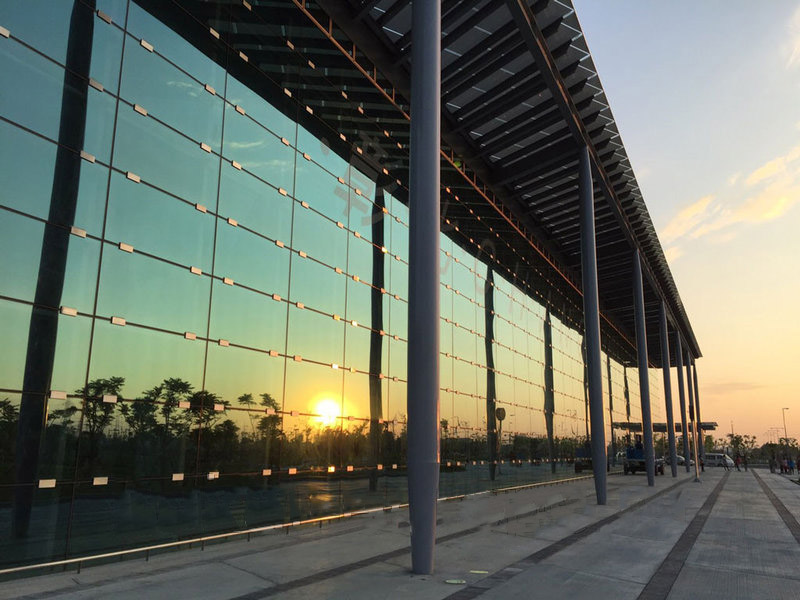 Solar photovoltaic modules for energy production integrated into the building have been named BIPV.
The solar modules are innovative, complete and reliable energy-generating system. We believe that the main requirement for photovoltaic modules is their high quality. The quality and reliability of our modules perfectly demonstrate our international projects, considering the fact that World Management Incorporation offers various effective solar solutions for wide range of global projects.
The modules we use, are easy integrating into almost any building structure, improve the design of buildings, increase the cost of the facility, and even more – they produce an energy.
Modern BIPV projects, using CIGS photovoltaic modules as a building material for cladding and building envelopes, effectively produce electrical energy. The modules are high quality and design meet strict aesthetic requirements, allow investors to obtain a significant economic result in the form of solar electricity. This is even more advantageous since no additional space is required to install such a system, unlike a conventional autonomous solar system. The problem of module placement is especially important if we take into account the energy that BIPV can produce in a limited area of a large metropolis.
BIPV (Building Integrated Photovoltaics) is the photovoltaics integration into the building envelope. The PV thin film panels serve the dual role of building skin: replace conventional building envelope materials and power generator. By avoiding the cost of conventional materials, the incremental cost of photovoltaics reduce and it improves its life-cycle cost. BIPV systems often have lower overall costs than PV systems requiring separate, dedicated, mounting systems.
The thin-film architectural panels added to the BIPV allow and ease full building integration of facades and windows. With these technologies, we expect that the future of photovoltaics is BIPV. The key of BIPV is that the marginal more cost in the installation is more than offset by using to produce renewable energy. BIPV is one of the fastest growing up segments of the photovoltaic industry.
There is a growing up consensus that distributed photovoltaic systems that give electricity at the place of use will be the first to reach widespread commercialization. The chief among these distributed applications are the solar power stations for individual buildings.
Interest in the building integration of photovoltaics, where the PV elements become an integral part of the building, often serving as the exterior weather skin, is growing worldwide. Photovoltaic specialists and innovative designers in Europe, Japan, and the U.S. are now exploring ways of incorporating solar electricity into their work. Nowadays a new Photovoltaic Architecture Industry emerged.